Comment mesurer votre taille de bague

Il est essentiel de trouver la taille de bague parfaite pour garantir un ajustement confortable et sécurisé. Suivez ces étapes pour mesurer précisément la taille de votre doigt : 

Tout d'abord, préparez vos outils. Un ruban à mesurer flexible et non extensible est idéal, mais à défaut, un morceau de ficelle ou une bande de papier fera l'affaire, accompagné d'une règle, conviendra parfaitement. Vous aurez également besoin d'un marqueur ou d'un stylo pour marquer la ficelle ou le papier si vous utilisez ces outils, ainsi qu'un tableau des tailles de bague, facilement disponible en ligne ou dans les bijouteries. 

Le timing est essentiel lorsque vous mesurez votre taille de bague. Vos doigts peuvent gonfler ou rétrécir au cours de la journée en raison de divers facteurs tels que la température, l'humidité et l'activité physique. Pour obtenir une mesure aussi précise que possible, mesurez votre doigt en fin de journée, lorsqu'il est probablement à son maximum de taille. 

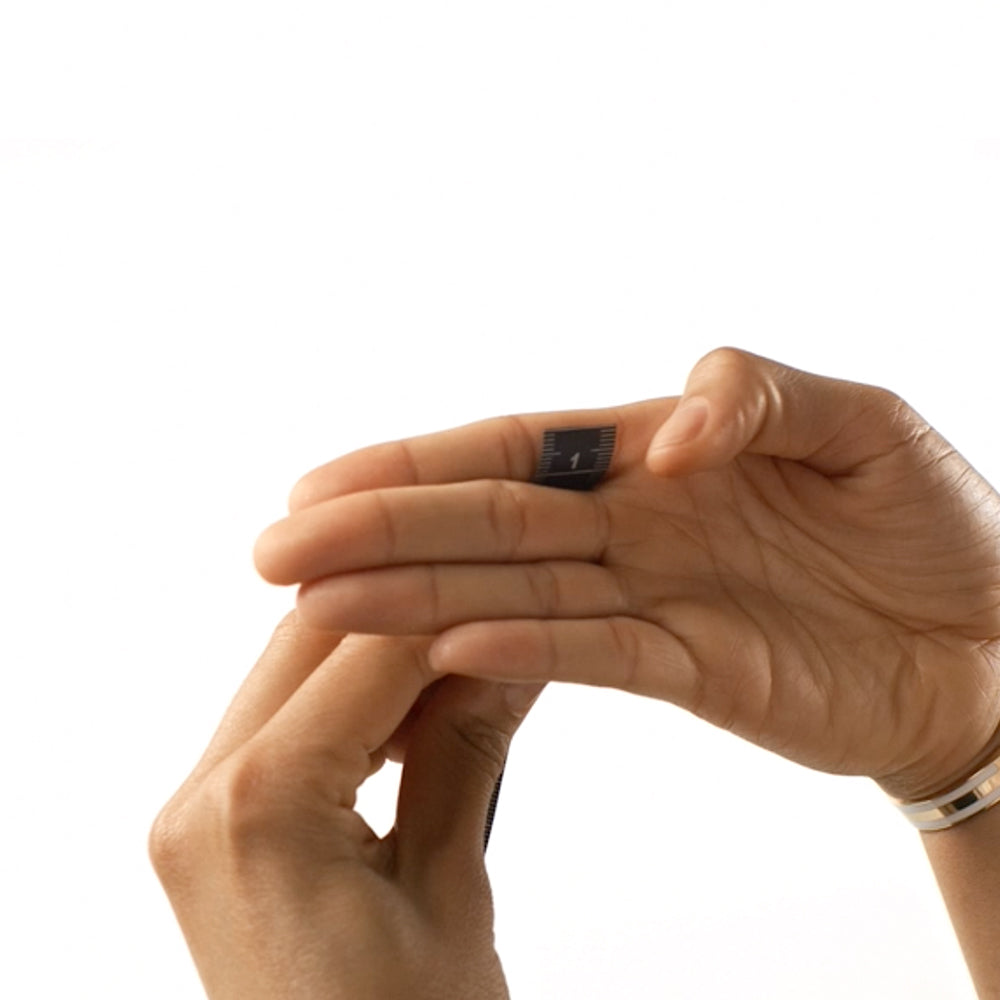
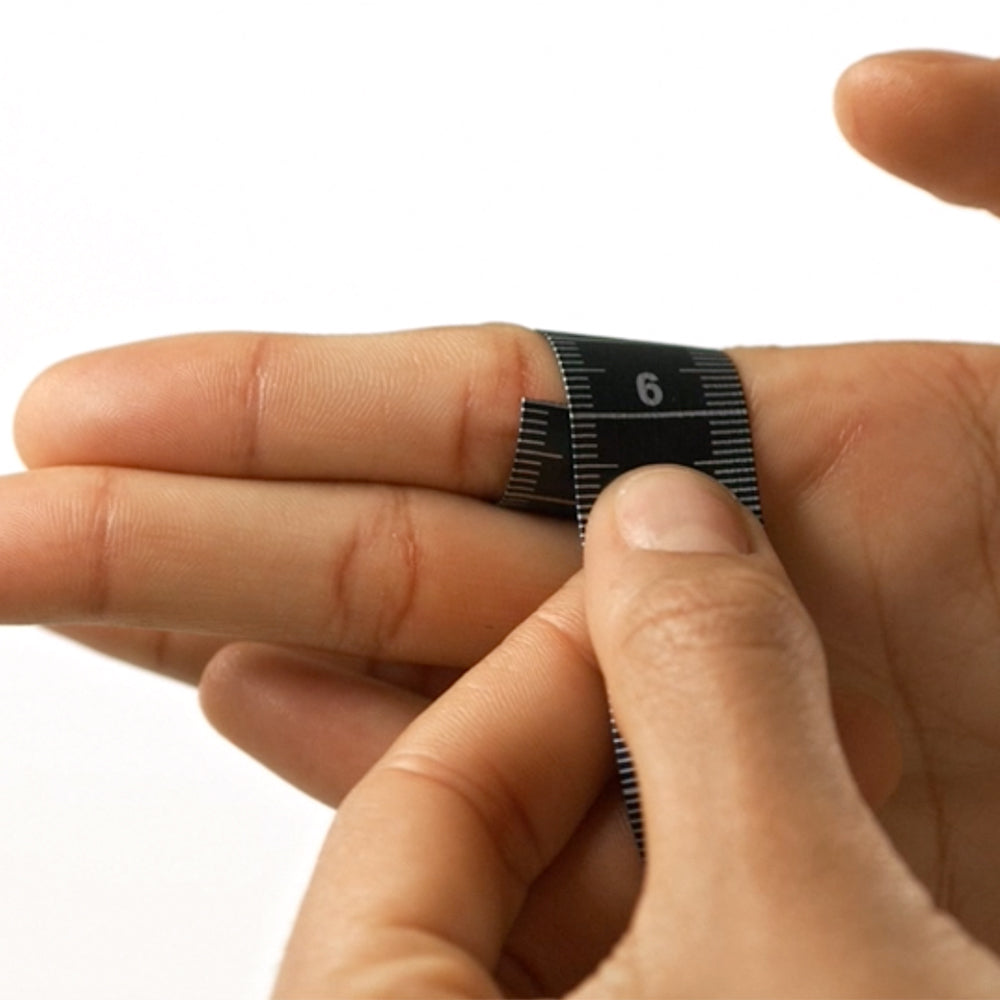
Avec un mètre ruban

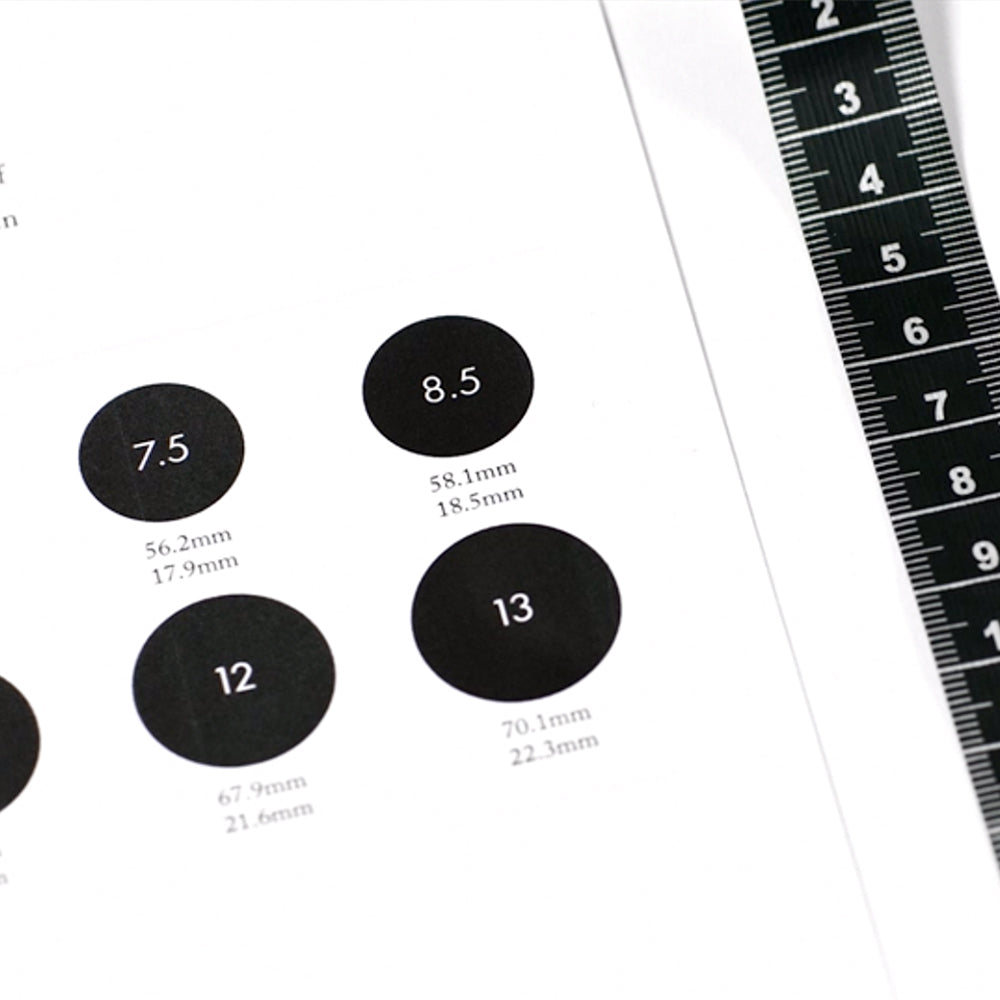
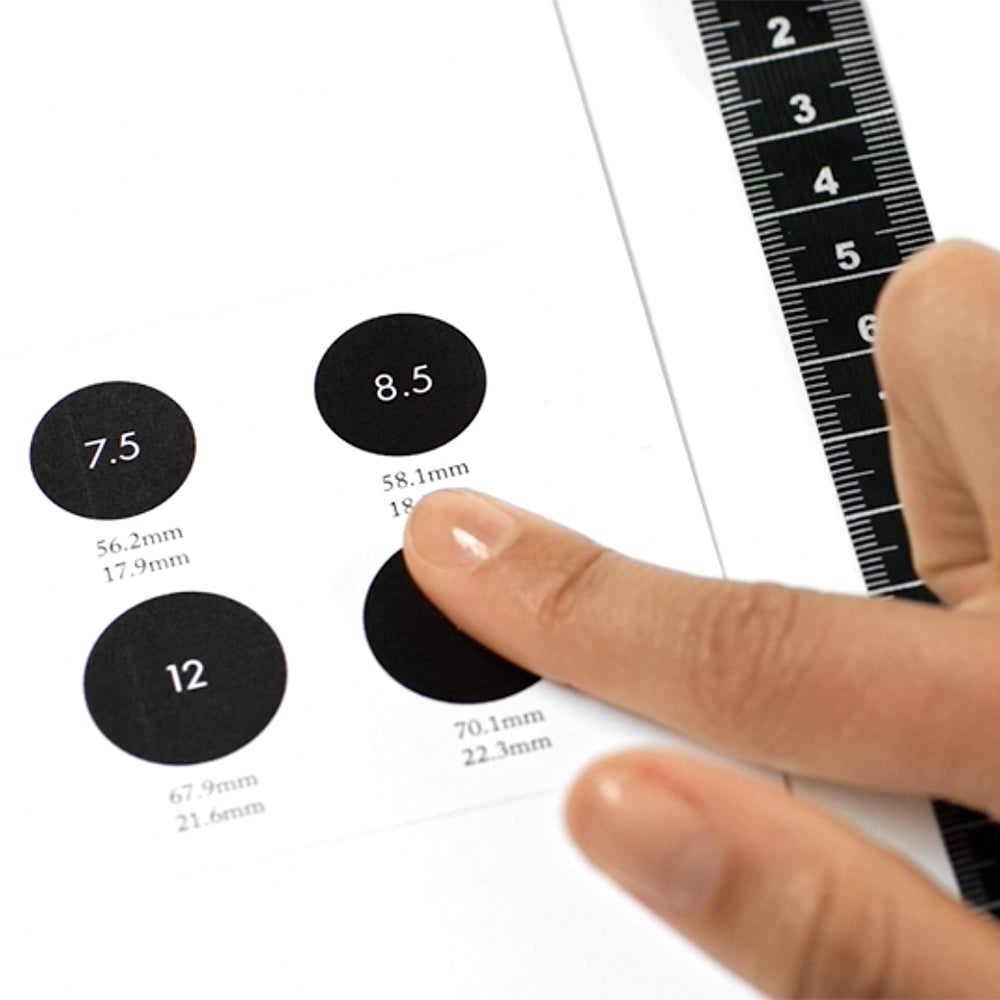
notez les mesures en millimètres et utilisez le tableau de comparaison ou le guide des tailles en PDF pour trouver votre taille de bague.

1. To measure your finger, gently wrap the measuring tape around the base of your finger. Ensure it’s snug but not too tight, allowing for a comfortable fit without squeezing. If you’re using a piece of string or a strip of paper instead, mark the point where the end meets the rest of the material. Your ring needs to fit over your knuckle, which is often the widest part of your finger. Therefore, to ensure a comfortable fit, measure both the base of your finger and around your knuckle. If your knuckle is significantly larger than the base of your finger, consider using the average of these two measurements. This way, your ring will fit comfortably over the knuckle but not be too loose at the base.

2. Next, record the measurement. If you are using a measuring tape, directly read the measurement from the tape at the point where it overlaps. If you are using a string or paper, lay the marked string or paper flat on a surface and measure its length with a ruler. Ensure the ruler is placed straight and the string or paper is not stretched, as this could lead to inaccurate measurements.

3. Then, use a ring size chart to convert your measurement to the corresponding ring size. Ring size charts are easily available online and typically include sizes for different regions, such as the US, UK, and Europe. Be sure to select the correct chart for your region to avoid any discrepancies. The chart will match your measurement to a specific ring size, making it easy to find the right fit.

4. It's important to consider the dominant hand factor when measuring your ring size. The same finger on your left and right hands may differ slightly in size. Typically, the dominant hand—the one you use more frequently—might be slightly larger due to increased muscle development and usage. Therefore, measure the specific finger on the hand you plan to wear the ring. This ensures a more accurate fit, as even minor differences can affect the comfort and security of the ring.

1. Measure with printed PDF

2. Measure with PDF on Mobile

3. Measure with cut-out-ruler

If you don't have a ring size chart or
measuring tape, you can still measure your ring size accurately with just a
ruler. Here's how: Take a flexible, non-stretchy string or strip of paper, wrap
it around the base of your finger, and mark where it overlaps. Lay it flat and
measure the length in millimeters. Use an online ring size chart to find your
size, accounting for regional differences. For wider bands, consider going up
half a size for comfort. Repeat this process at different times of the day for
the best fit. For a step-by-step visual guide, check out our YouTube video
guide.

4. Measure with measuring tape

To ensure accurate ring size measurement with
a string, make sure it fits comfortably around your finger—neither too tight
nor too loose. A tight string may lead to an overly snug ring, while a loose
one might cause the ring to slip off. After marking and measuring the string,
compare your measurement with multiple ring size charts for consistency. For
better precision, use a minimally stretchy material like embroidery floss.
Double-check your measurements at different times of the day to account for finger
size fluctuations. For a step-by-step guide, check out our YouTube video
tutorial.

Tableau des tailles de bague

Les tableaux des tailles de bague vous permettent de trouver la taille idéale en comparant la mesure de votre doigt avec les tailles standardisées des différentes régions. Chaque pays utilise un système de taille différent :es numéros aux États-Unis et au Canada, des lettres au Royaume-Uni et les circonférences en millimètres en Europe. Ces variations résultent des différences historiques et de méthodes de mesure, ce qui fait donc qu'une taille dans un pays peut ne pas correspondre à la même taille ailleurs. Lors de l'achat de bagues à l'international, il est donc important d'utiliser un tableau des tailles de bague pour convertir entre les systèmes et garantir un ajustement parfait.

Utilisez le baguier ci-dessous pour comparer les tailles de bague entre les pays. it.
  

US/Canada 

UK/Australia 

Europe 

Japan 

Switzerland 

4.0 

H 

46.5 

7 

7.75 

4.5 

I 

48.0 

8 

8.5 

5.0 

J 

49.0 

9 

9.25 

5.5 

K 

50.3 

10 

9.75 

6.0 

L 

51.5 

11 

10.25 

6.5 

M 

53.1 

12 

11.0 

7.0 

N 

54.4 

13 

11.75 

7.5 

O 

55.7 

14 

12.25 

8.0 

P 

57.0 

15 

13.0 

8.5 

Q 

58.3 

16 

13.5 

9.0 

R 

59.5 

17 

14.25 

9.5 

S 

60.8 

18 

15.0 

10.0 

T 

62.1 

19 

15.75 

10.5 

U 

63.4 

20 

16.25 

11.0 

V 

64.6 

21 

17.0 

11.5 

W 

65.9 

22 

17.75 

12.0 

X 

67.2 

23 

18.25 

12.5 

Y 

68.5 

24 

19.0 

13.0 

Z 

69.7 

25 

19.75 

13.5 

Z+1 

71.0 

26 

20.25 

14.0 

Z+2 

72.3 

27 

21.0 

14.5 

Z+3 

73.6 

28 

21.75 

15.0 


74.8 

29 

22.5 


Taille de bague en cm ou pouces

Aux États-Unis et au Canada, les tailles de bague sont exprimées en chiffres, ce qui ne correspond pas directement aux mesures en pouces ou centimètres. Ces tailles sont calculées à partir de la circonférence interne ou du diamètre de la bague, mais les chiffres eux-mêmes font partie d'une échelle standardisée.

Au Royaume-Uni et en Australie, les tailles de bague sont exprimées en lettres (par exemple, H, I, J) plutôt qu’en pouces ou en centimètres. Tout comme le système américain, ces lettres correspondent à des circonférences ou diamètres internes spécifiques, mais elles font partie d'une échelle propre à ces pays.